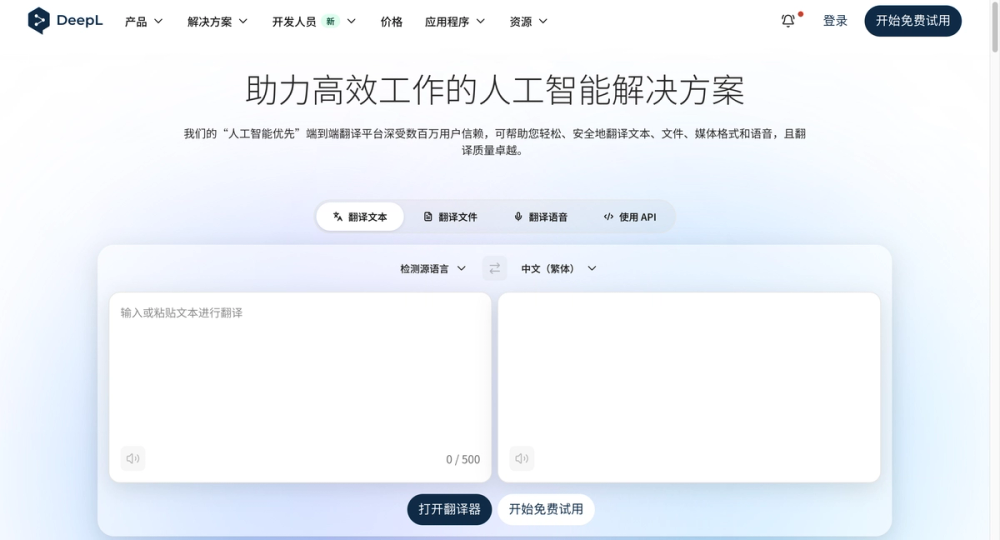
Compare AI Translators for accuracy, language support, context awareness, and translation quality.
AI Translators are tools that use artificial intelligence to translate text, speech, documents, or other content between different languages. They use contextual understanding to produce translations that can be more natural and adaptable than direct word-for-word conversion.
Travelers
Travelers use AI Translators to communicate across language barriers during trips, including translating signs, menus, messages, and conversations. Real-time translation features can make basic communication easier in unfamiliar environments.
Content Creators
Content creators use AI Translators to localize articles, videos, subtitles, social posts, and other content for international audiences. They can quickly create multilingual versions while maintaining the original meaning and tone.
Businesses
Businesses use AI Translators to translate emails, documents, product information, customer communications, and internal materials. They can support international operations without requiring every translation to be completed manually.
Developers
Developers integrate AI translation capabilities into websites, applications, customer support systems, and communication platforms through APIs. They can use these services for automatic localization, multilingual interfaces, and real-time language processing.
AI Translators typically use neural language models trained on large multilingual datasets to understand the relationship between languages. The system analyzes the meaning and context of the source content before generating a translation that matches the target language's grammar, vocabulary, and structure.